Team 7190 / 2026 FRC season
2026 FRC competition robot
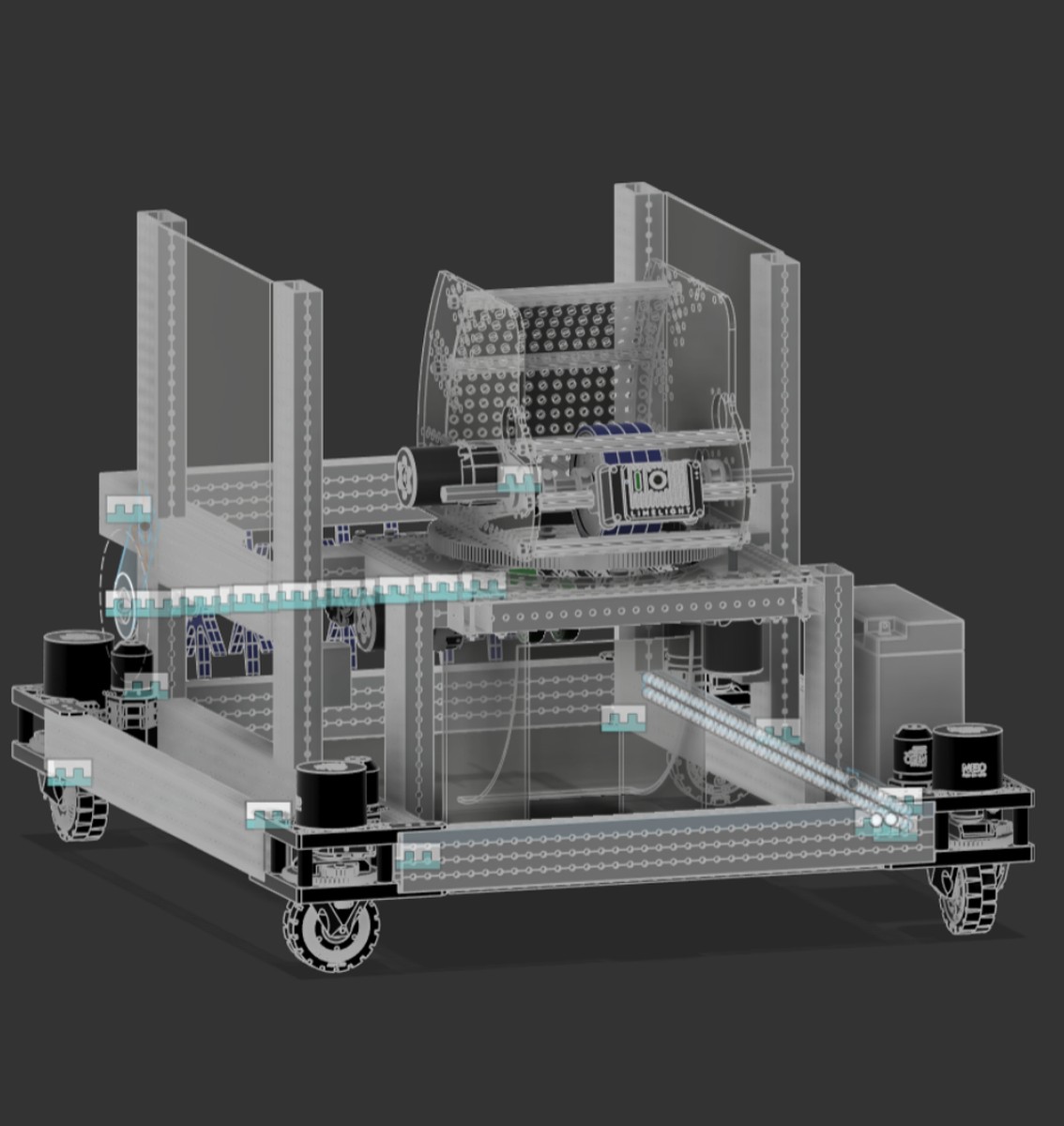
I designed the chassis around four swerve modules, plus the geared turret, centering indexer, and kicker in Fusion. I wired the complete robot and handled driving and field repair.
Alliance-selected playoff run
Teammates developed the software and intake mechanism; we collaborated on fabrication and assembly.
Explore the engineering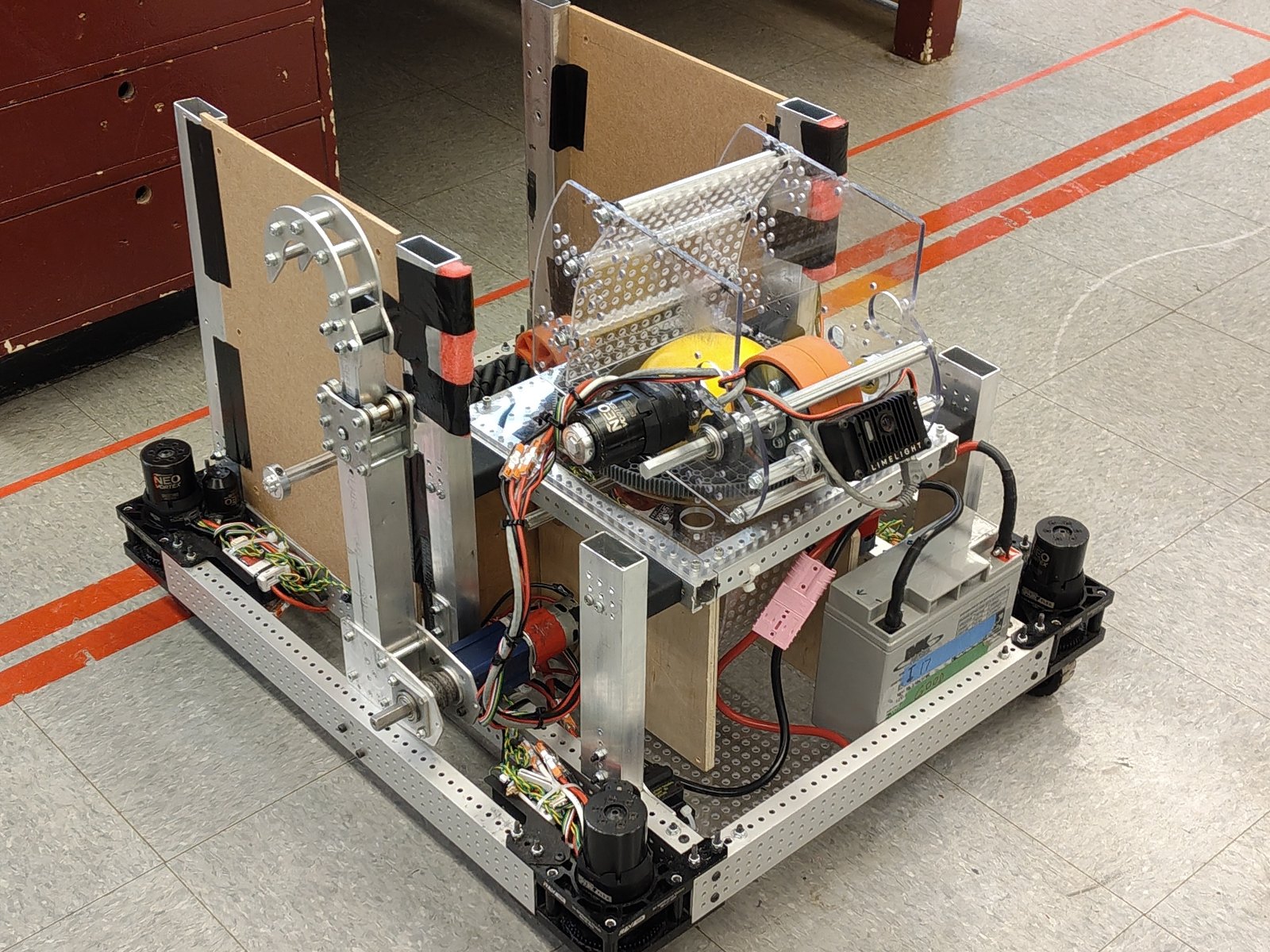
Mechanical architecture
Redesigning the game-piece path
Hopper jams → centering indexer
Multiple agitator approaches still let game pieces lock together in the hopper. I designed an indexer using vectored intake wheels and compliant star wheels to center them, then a kicker to feed the shooter.
A pinion drove the shooter's large gear. The turret encoder, Limelight 4, and Pigeon 2.0 supplied feedback to the programming team's aiming controls.
The built robot retained the main Fusion layout. I also helped cut aluminum and sheet parts during fabrication.
Electrical integration
Designing for access and field repair
A harness repair before the next match
A hard collision pulled wires free from one swerve module. I traced the damage and restored the harness between matches.
roboRIO, Pigeon 2.0 gyro, Limelight 4, and encoders on all four swerve modules and the turret.
REV power-distribution hardware, 12 AWG motor circuits, and SPARK-series controllers across 12+ motors, many of them NEO Vortex units.
A CAN chain linked the distributed controllers and sensors. I diagnosed CAN and power-distribution faults using vendor diagnostics and physical harness tracing.
Most electronics were centralized on a perforated board beneath the ball ramp, protected from mechanisms but accessible for service.
WAGO inline connectors supported fast replacement, and vulnerable connections were secured against impact and vibration.
Field validation
Adapting in competition
I drove during an alliance-selected playoff run. The team's autonomous routine used the turret and vision system to score. When the intake became unreliable, the team removed it and shifted toward aggressive defence and counter-scoring.